

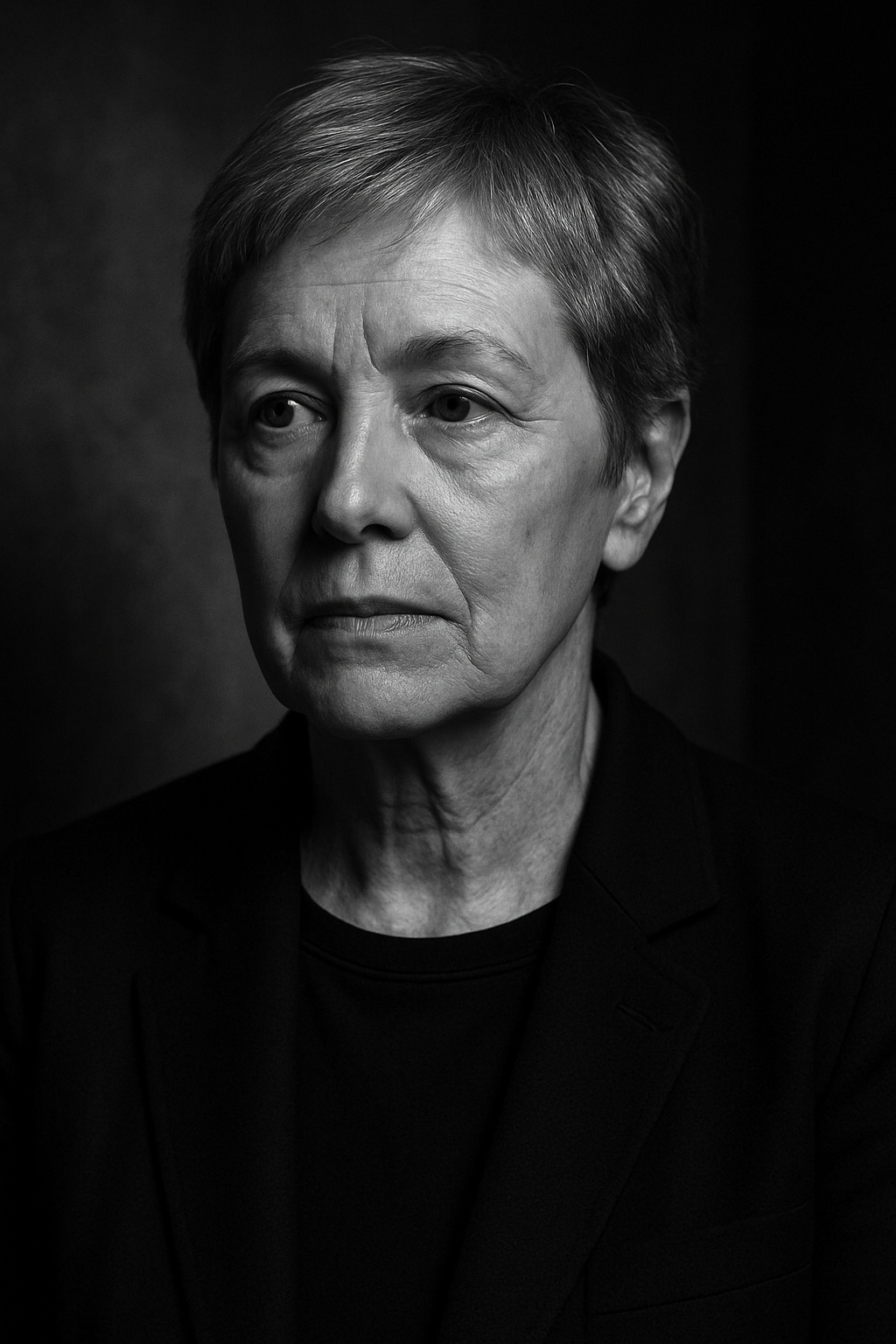
Early Life and Family
Margaret Elaine Porter was born on April 7, 1959, in Cooperstown, New York, a small town along the Susquehanna River. Her father, Harold Edward Porter, worked as a postal carrier for the United States Postal Service, walking the same twenty-mile route through Cooperstown for thirty-two years. He was a methodical man who kept a small garden behind their house and read the Cooperstown Crier each evening with the diligence of someone for whom the local news was scripture.
Her mother, Diane Louise (Crawford) Porter, worked as a school nurse at the local elementary school, a position she held from 1955 until her retirement in 1992. Diane came from a family of upstate New York farmers and brought to nursing the same pragmatic care she had learned tending to livestock and younger siblings. She taught Margaret to read thermometers, apply pressure to wounds, and understand that competence was a form of kindness.
Margaret was an only child—her mother had suffered complications during childbirth that prevented further pregnancies. The family lived in a modest one-story house with peeling white paint and a single elm in the yard. The house was quiet, ordered, and pervaded by a sense of careful maintenance. Margaret learned early to occupy herself, spending afternoons watching her mother restock the medicine cabinet or prepare dressings at the kitchen table.
She was an observant child, cautious in speech, more comfortable with tasks than conversation. In high school she joined the volunteer ambulance corps, learning to splint fractures and take blood pressure readings before she could drive. Her guidance counselor told her she would make a good nurse; she filled out the SUNY application that same week.
Education and Early Career
At the University at Buffalo she studied nursing, working nights at a teaching hospital on Main Street. The city was cold, the pay was poor, and she liked the directness of the work. After graduation in 1981 she applied to the Army Nurse Corps, one of the few employers offering steady pay and travel. She received her commission that autumn.
Her parents came to the ceremony at Fort Sam Houston. Her father wore his postal service uniform, her mother a navy dress she'd bought for the occasion. They stood together in the Texas heat, watching their only daughter take the oath. Harold shook her hand; Diane kissed her cheek. They drove back to Cooperstown the next day, and Margaret shipped out to Germany two weeks later.
Germany
Porter's first posting was to the 97th General Hospital in Frankfurt, West Germany. The compound stood at the edge of the city, a warren of low buildings surrounded by pine trees and chain-link fencing. The hospital corridors were narrow, their walls tiled halfway up in beige ceramic. She worked twelve-hour shifts on a surgical ward that handled both American soldiers and German civilians injured in training accidents or car crashes.
At night, trains passed beyond the perimeter fence, their lights moving silently across the treeline. Off duty, she would walk into Frankfurt with two other nurses for coffee and newspapers, then return to the base before curfew. They shared a two-room flat with thin walls and a balcony that overlooked a supermarket parking lot. On Sundays, the town shut down except for the bakeries, and she wrote letters home on military stationery, describing the shape of the streets rather than their meaning.
Asia
In 1985 she transferred to a field hospital unit based in Thailand as part of a joint humanitarian program. The work was improvisational: setting up surgical tents near provincial hospitals, coordinating with local nurses, and managing supply drops that arrived by C-130. The pace was uneven—days of waiting followed by sudden activity when a convoy arrived.
She learned fragments of Thai, enough to manage patient intake. Photographs from that period show her standing near a canvas tent, hair pulled back, clipboard in hand. The uniform was the same khaki shade as the soil. The camp dogs slept under the vehicles during the heat of the afternoon. At night, the generators dimmed and the air was filled with the high drone of insects. She kept a small shortwave radio tuned to English-language news broadcasts.
Later postings included the Philippines and Korea. By the early 1990s she had returned to the United States for graduate study at the Uniformed Services University of the Health Sciences, focusing on epidemiology.
Desert Deployments
During Operation Desert Storm she was assigned to a mobile medical battalion near Al Jahra, Kuwait. The tents were arranged in rows, connected by plywood walkways. Each day began with equipment checks: ventilators, IV lines, blood storage coolers. The patients arrived in spurts—convoy accidents, heat casualties, burns from fuel mishandling. She recorded names and vitals on laminated tags tied to the wrists.
A photograph from the period shows her standing beside an M-577 medical vehicle, one hand resting on the edge of the hatch, eyes narrowed against the light. There is no expression that reads as pride or fatigue; only focus.
After Kuwait came Bosnia in the late 1990s, where she supervised vaccination and sanitation efforts in winter conditions. The compound there was muddy, surrounded by prefabricated housing units. She worked from a small office inside a converted shipping container. At night she typed reports on a portable computer that rattled against the metal desk when artillery fired miles away.
Personal Life and Anna
Porter never married. During a rotation in Cambodia in 1996 as part of a medical assistance team, she encountered a young girl, approximately five years old, at an orphanage in Phnom Penh. The child, Anna Sok, had been found abandoned near the Thai border, with no records of her family. Margaret returned to the orphanage repeatedly during her deployment, bringing medical supplies and spending time with the children.
She began adoption proceedings in 1996, navigating the complex requirements of international adoption while maintaining her military duties. The process took eighteen months. Anna Sok Porter officially became her daughter in 1997, when Margaret was stationed at Walter Reed Army Medical Center in Maryland. Anna was quiet, resilient, and learned English with determined focus. Margaret taught her to read using the same patience her mother had shown her.
Her parents, Harold and Diane, met their granddaughter for the first time during Christmas leave in 1997. Harold built a small bedroom addition to their Cooperstown house so Anna would have a space when they visited. Diane sewed curtains and taught Anna to bake bread. The girl who had grown up an only child became a mother to an only child, and the quiet Porter house suddenly held more voices.
Later Years
Porter retired in 2005 with the rank of Lieutenant Colonel. She moved to Asheville, North Carolina, with Anna, then eight years old. They lived in a brick house on a quiet street near the Blue Ridge foothills. Anna attended public school, played soccer, and eventually enrolled at UNC Chapel Hill to study international relations.
Margaret's father Harold passed away in 2008 from a stroke; her mother Diane died in 2012 following a long illness. Margaret returned to Cooperstown to settle their affairs, standing in the empty house where the medicine cabinet still held bandages her mother had organized decades earlier.
In retirement she consulted occasionally for disaster-response agencies, reviewing medical logistics plans. She gardened, volunteered at a local clinic, and kept a wall of framed maps from her deployments. Anna graduated college in 2019 and now works for an NGO focused on refugee healthcare—drawn, perhaps inevitably, to the intersection of medicine and displacement that had shaped her own early life.
Margaret's papers—field notes, typed reports, letters—form a continuous record of twenty-four years of service across four continents. They show a life marked less by ideology than by repetition: lists of supplies, coordinates, daily rosters, patient tallies. In their precision is something like the shape of endurance, though she never wrote about it directly.